|
Kenneth Davis
strug·gle - [ˈstrəɡ(ə)l] - verb
1. make forceful or violent efforts to get free of restraint or constriction: "before she could struggle, he lifted her up" · "he struggled to break free"
 
SMALL STRAWS IN A SOFT WIND by Marsha Burns
August 16, 2023: It has been a struggle to reach this new plateau, and the worst of the struggle is over. You can now establish yourself on this higher level of spirit life and awareness. You have made it through extreme challenges, and you have not only survived, but you will begin to thrive on this new level of existence. 1 Peter 5:10 And the God of all grace, who called you to his eternal glory in Christ, after you have suffered a little while, will himself restore you and make you strong, firm and steadfast.
T H O U G H T F O R C O N S I D E R A T I O N
I really hate to see abusive behavior being passed on from generation to generation to generation, when we have access to health and counseling. I came from poverty and was part of those circumstances. My mother really wanted me to be in possibly a beauty pageant, not only for if I could win, but it helped improve my self-image because of trauma in my childhood and other issues.
Let's start working towards wellness, a healing in our community, a healing in relationships, so male and female can finally sit down and understand that that young boy or young girl saw behavior exhibited by their parents that was negative and abusive and they're going to pass it on.
~Pam Grier~
.jpg)
Pam Grier was born in Winston-Salem, NC, one of four children of Gwendolyn Sylvia (Samuels), a nurse, and Clarence Ransom Grier Jr., an Air Force mechanic. Pam has been a major African-American star from the early 1970s. Her career started in 1971, when Roger Corman of New World Pictures launched her with The Big Doll House (1971), about a women's penitentiary, and The Big Bird Cage (1972).
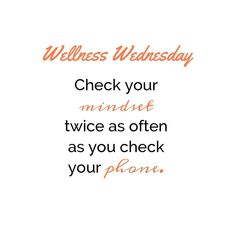
WELLNESS WEDNESDAY

What Is ‘Drama Addiction’?
Here Are a Doctor’s 7 Red Flags You Have One
Jaime Stathis - The Healthy / A readers Digest Brand
Americans are more stressed and anxious than ever. The American Psychological Association’s Stress in America 2022 survey showed what the APA referred to as “a battered American psyche” and a population that largely feels out of control. From civil liberties distress to worries about the economy to the environment, Americans report a lot is keeping them up at night. Some of this stress and anxiety is due to external factors, like the issues out in the world, and some due to internal stimuli (“I don’t have control”). All of it, says Dr. Scott Lyons PhD, DO, can lead to an addiction to drama. When crisis and chaos are the norm, drama can feel like a balm.
Scott Lyons is a doctor of osteopathy and licensed holistic psychologist, as well as the author of the May 2023 book, Addicted to Drama. Dr. Lyons spoke with The Healthy @Reader’s Digest about drama addiction and even created a drama addiction quiz to help determine if you or someone you know is drama-obsessed.
What is drama addiction?
Dr. Lyons admits there’s no easy way to describe addiction to drama, so he leaned on a quote from Alfred Hitchcock: “Drama is life with the dull bits cut out.” Dr. Lyons reframes addiction to drama to show how addiction to drama is an adaptive survival mechanism and how it helps us. “Addiction to drama is an avoidant strategy to help us keep distance from our underlying pain and trauma,” he says, adding that it’s about making sensations in response to numbness.
“When we have trauma or pain, our body freezes and creates a protection response, and that freezing is essentially a layer of numbness,” Dr. Lyons explains. “Drama helps bring us over the height of the wall so we feel something,” Dr. Lyons says, “and it reminds us we’re alive.”
What are common symptoms of drama addiction?
Dr. Lyons says he has experience being both in the drama himself and observing it as a researcher and therapist. He’s identified seven common symptoms.
Lack of control, which Dr. Lyons defines as “The inability to control the external world leads to feelings of being overwhelmed, helpless and victimized.”
Always Intense – “Intensity for people addicted to drama often translates to an unrelenting sense of urgency,” Dr. Lyons explains. “Without it, something feels wrong.”
Prone to Overreaction – “Extreme thinking, creation of big stories, and the meaning and emotion associated with them lead to overreactions.”
Feeling alone, isolated and abandoned – “Inherent in the sense of feeling abandoned and alone is a mistrust that anyone would or could support or be present for them,” Dr. Lyons says.
A constant sense of uneasiness – People with an addiction to drama feel like something is always about to go wrong. This looks different from the outside, where it feels like the drama addict is sucking the air out of the room, but from the inside the drama addict “is assigning meaning and trying to make sense of the constant sensation of dis-ease.”
Numbness and sensory overload – “They have a continuous sense of too much and not enough of anything, but especially feelings,” Dr. Lyons explains.
Dissociation – “Many people addicted to drama experience variations of disassociation, or a sense of being anchorless, detached from themselves, and lacking solid ground and a sense of stability,” Dr. Lyons says.
How to thrive with (and around) drama addiction
Whether you’re a drama addict or close to someone who is, the most important thing is identifying it without judgment. When it’s someone else, Dr. Lyons encourages “empathic understanding,” which means you don’t try to fix them, and you reframe or reorient your orientation to the behavior. This may look like clarifying your boundaries and taking alone time to re-center yourself. Sometimes, it can mean walking away from a relationship.
|



.jpg)
.jpg)







(7).jpg)







.jpg)









.jpg)







.jpg)



.jpg)

.jpg)
.jpg)
.jpg)

.jpg)

%20CASSETTE%201.jpg)






.jpg)








.jpg)


