
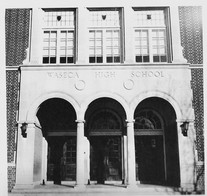
Waseca High School

Class Of 1963




Quiz Answers
- The feisty labor organizer, Mary Harris Jones (1830–1930), did just that in 1903. Called “Mother” Jones by everyone, her goal for the march was to bring the evils of child labor to the attention of the president and the national press.
- Harriet Tubman (1820–1913), who also led over 300 people in their escape from slavery via the system of safe–houses known as the Underground Railroad.
- Dolores Huerta (b. 1930), a long–time Chicana labor activist, co–founded the United Farm Workers union in 1962. She served for over two decades as the union’s vice–president and chief lobbyist, savvy labor contract negotiator, and nationwide speaker.
- In 1905, Madam C.J. Walker (1867–1919) began developing an effective hair lotion, and then a special comb to straighten curly hair. She eventually employed 3,000 people, mostly Black women, to work in her factories and sell her line of products.
- Chien–Shiung Wu (1912 – 1997) received both the National Science Medal and the internationally respected Wolf prize for her scientific research. Her most famous experiment showed that conservation of parity could be violated in nature.
- Eleanor Roosevelt (1884–1962) was America’s First Lady for 12 years. Later, she served as U.S. delegate to the United Nations where she was instrumental in securing passage of the Universal Declaration of Human Rights.
- Jovita Idar (1885–1946) lived in Laredo, Texas. As a journalist, she wrote articles for Spanish–language newspapers, like El Progreso and El Heraldo Cristiano, which argued for Mexican Americans’ equal rights.
- Queen Liliuokalani (1838–1917). A revolution, encouraged and actively assisted by American interests backed by a U.S. Navy gunboat, established a provisional government in 1893. Among her lasting legacies: she composed over 200 songs, including “Aloha Oe”.
- Jane Addams (1860–1935). One of the first generation of female college graduates at a time when the world was not yet ready to give educated women positions of responsibility, found her own way to lead a useful life. She won the 1931 Nobel Peace Prize for her lifetime dedication to the cause of international peace.
- Sarah Winnemucca (1844–1891), later named a chief in her own right. Her autobiography, Life Among the Piutes: Their Wrongs and Claims, was one of the first books by a Native American.
- Marian Anderson (b. 1902), who had earlier been barred from the singing in the Washington’s Constitution Hall because she was Black. Her open–air concert was a triumph over bigotry for this international star.
- Mary Katherine Goddard (1738–1816), newspaper publisher, had such a strong reputation in the colonies that when Congress fled to Baltimore in 1776 they trusted her with the revolutionary task of printing their treasonous document. Goddard risked arrest by the British when she included her own name as printer.
- No provisions had been made for taking care of Union soldiers. Clara Barton (1821–1912) solicited donated supplies and took them directly onto battlegrounds, to get food, bandages, and medical supplies to the wounded. She also helped document the 22,000 men killed or missing in action so their families could be notified.
- Maria Tallchief (b. 1925), gained international stardom as prima ballerina of the New York City Ballet in a career that spanned 23 years. In 1980, she and her sister, Marjorie, founded the Chicago City Ballet.
- Rachel Carson (1907–1964), a writer and biologist, touched off an international controversy about the environmental effects of pesticides with her 1962 book, The Silent Spring. The book became a best–seller and the foundation of modern ecological awareness.