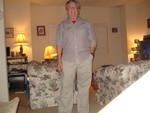
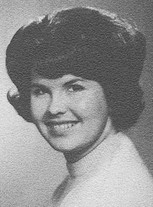
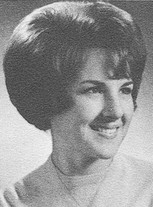
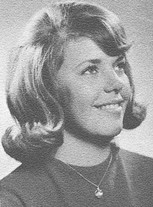
I apologize in advance for the length of this post, but while we were looking through a yearbook today at the picnic there was a discussion of faculty members. I had seen this obituary back in December when it was posted and I think it's worth sharing. We were not only privileged to grow up in a nice, and safe, place with great classmates, but we were surrounded by people who had won a war and saved the world, but were so modest that even their children didn't even know what they had done. Dr. Kadar was one of those people.
Dr. Geza Kadar
1920-2013
Dr. Geza Kadar, whose fate and career as a diplomat and educator caused him to move and rebuild his life in four different countries, passed away Nov. 24, 2013, in Budapest, Hungary.
Kadar was born in Budapest in 1920 during the turmoil at the end of World War I, when the victors were carving up Hungary’s historic borders at the Trianon Convention. His father, a poorly paid government notary in the then-Hungarian sector of Croatia, was forced to evacuate and the family lost all of its possessions.
Back in Budapest, his father died when Kadar was only 3 years old and his mother took a job as a postal clerk. In 1930, he earned a full scholarship to a fine secondary school, which he maintained with a distinguished record of scholarship. During his high school and university years, Kadar was active in the recently formed Boy Scouts movement and the Hungarian Reformed Church. He thrilled at attending the Fourth World Scouting Jamboree in 1934.
He was admitted to law school in Budapest and, in 1938, as an exchange student, was taking courses at the University of Berlin shortly before World War II began. For sending critical reports to his contacts in Budapest on the rising tide of fascism and German anti-Semitism, he was harassed by German authorities and expelled from Germany.
Back in Budapest, he became an active member of the secretive Movement for Hungarian Independence, a small group of Hungarian nationalists who opposed the German occupation of Hungary in 1944 and resisted the communists who became active after Russian troops replaced the Germans.
Kadar served as a foreign service officer in the first post-World War II government in Hungary. His first assignments were as administrative assistant to Prime Minister Zoltan Tildy, and then Ference Nagy. Just as he was coming of age professionally, he was swept up in the postwar communist terror wave in Hungary. In January of 1947, when the Communist Party with the support of the Russian Army overthrew Hungary’s first democratically elected government, he was arrested by the secret police (AVO) and confined first, at the infamous Andrassy Street prison, and then at the Marko Street prison.
Before beginning his sentence for alleged “crimes against the new Peoples Republic of Hungary,” Kadar was given hospital treatment for a neglected leg injury and, while under less rigorous police supervision, he was able to escape. He reunited with his bride of less than a year, Shari Kadar, and with the help of his brother-in-law, the couple walked across the Austrian border in the winter of 1948. His first son, Geza Jr., was born that September in a refugee camp in Zurich.
When international tensions seemed to be flaring again in 1949, the family moved to Melbourne, Australia. During eight very difficult years, with remarkable support from his versatile and talented wife, Kadar built a house by hand without power tools, obtained a teaching credential from the University of Melbourne, and added a son, Bence, and a daughter, Kathy, to the family.
In the fall of 1957, a letter arrived from the U.S. State Department inquiring whether the family was still interested in coming to the United States. Forever grateful that their original application was not forgotten in the U.S. bureaucracy, the family sold everything, packed up and immigrated to California, where Kadar found a teaching position at Ridgeview Junior High School in Napa.
When Napa College was created in 1964, he joined the original faculty as a professor of Germanic studies and humanities. As the division chairman of the language department, he helped to design and install the college’s state-of-the art foreign-language training laboratory. He retired in 1984.
No one was more surprised by the fall of the Iron Curtain and the collapse of communism in Hungary in 1989 than Kadar. When President Bush started a Peace Corps program in Hungary with language-training specialists specifically requested by the Hungarian government, he volunteered, was selected, and departed for Budapest in 1990. His wife, Shari, had by this time launched a successful career as a sculptor and painter and preferred to stay in Napa. They divorced in 2000.
Kadar spent the last phase of his 85-year career consulting and supporting the fledgling democracy in his beloved homeland. After two years of teaching English to students at the University of Agriculture, he was offered a consulting position at the Ministry of Education to assist in the creation of a Hungarian junior college system. In 1995, Kadar’s contributions to his homeland were recognized at a ceremony where the president of Hungary awarded him a national Medal of Honor.
A month before he died, he was recognized by the Hungarian Parliament for being one of the oldest living Hungarian diplomats and for his work in the Movement for Hungarian Independence. He often told his family that this was one of the proudest moments in his life.
In his last 10 years in Budapest, he finally felt the satisfaction of being home. He followed every twist and turn in national politics from the safety and comfort of the John Calvin Home, where he lived with his new partner in life, Aniko Kovacs.
Kadar is survived by two of his three children, Kathy Kadar Pauletich of Redding, Calif., and Geza Kadar Jr. of Santa Rosa, Calif.; and by his daughters-in law, Barbara Kadar of Irvine, Calif., and Tara Harvey of Santa Rosa. His son, Bence Kadar, died in a sporting accident in 2010. He is also survived by five grandchildren: Elliot and Andrew Kadar, Lisa Kadar Pursley, Brian Kadar and Myles Pauletich; and two great-grandchildren: Quinn and Emma Pursley.
To paraphrase Dr. Seuss: “We don’t cry because his life is over, we smile because it happened.”