|
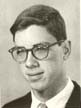
E. Franklin Dukes (1969)
@David Van Winkle: I don't think I've ever posted on this site, but your question about treatment at the American Hospital of Paris brought back a flood of memories.
On Dec. 16, 1963, when I was 12 years old, my parents took my 3 siblings and me from our home in Paris to Garmisch, Germany to ski. My third day of fearless skiing, wearing newly tightened bindings, I hit a patch of ice and suffered a grotesquely broken leg. A day later I landed in a hospital in Munich, in terrible pain, away from my family. One evening, a few days before Christmas, I heard the faintest sounds of music from somewhere in the hospital. An orderly told me that it was the world-famous Vienna Boys Choir, whose singing I had recently heard featured in a Disney movie (Almost Angels). To my delight, he promised me that they would be coming down our hallway! I became so excited as the angelic, ethereal sounds grew louder and the words more distinct. But the visit was not to be; I recall the bitter disappointment as the music simply faded away, without explanation, like so much else for me that winter.
This episode was a hallmark of my saga; I flew back to Paris with my leg unhealed and in constant pain, and spent a week at the American Hospital of Paris. I sharied a room with a soldier who was also a card sharp and who taught me to deal from the bottom of the deck, among other tricks. He and a female patient went AWOL before I left - quite an experience for a 12-year-old! As was spending Christmas in the hospital.
I again was moved, this time to the army hospital either in or near Orleans. This time I was in a ward - my 12-year-old self, a 15-year-old dependent, and all the rest of the ward made up of enlisted soldiers. After a week of continued intense pain, I was brought into the operating room, and told they were going to change my cast. I was quite suspicious, but relaxed as they wound the warm, wet plaster around my leg. That is, until the physician grabbed it firmly with both hands and rebroke the bones; no anesthesia, not even an aspirin. Things were different then! But that did the trick; the following night I was able to sleep for the first time without the intense pain, and two weeks later was discharged to finally go home. Home was in Parc du Château, in Louveciennes outside of Paris.
I was in a cast for five months, and then that September I was fooling around with a classmate in my eighth grade homeroom and re-broke the same leg, earning another three-month stay in the cast. No hospital stay this time, but I had a lengthy wait to get treated, which I was told was due to the corpsmen taking a long break to play basketball.
The broken legs and especially the missed Vienna Boys Choir became a family "sad story" of the Christmas season as my children were growing up, although the pain had long since passed. In fact, I enjoyed their anxious responses ("stop!" "no!") when I would pretend to start to tell the tale again as Christmas approached.
That is, until one birthday, 43 years later, when the story changed. My daughter, in her first year at the college of William and Mary, sent me my present as a card. Inside were two tickets and the heading cut out from the college's promotional flyer: "If You Missed Them Once, Don't Miss Them Again"!!! Yes - the Vienna Boys Choir was coming to the United States and performing at her college! That invitation seemed written for me! It was a sublime if somewhat surreal pleasure to share with her the complete performance that I had missed so many years earlier. And they were brilliant!
I don't recall the song that faintly echoed down the halls of that Munich hospital, but it might well have been "Es wird scho glei dumpa" ("It will soon be dark"). Certainly one portion of the song's lyrics seems appropriate for a child who longs for whatever may be missing during this season:
"Forget now, oh little child
your worries, your sorrow,
that you must suffer there."
But for me that song, and the Vienna Boys Choir, no longer evoke pain, but joy. And the story affirms that the large miracles of recovery are sometimes possible, even as the small miracle of beautiful music may be retrieved anywhere.
|